is it
grasping or clinging
to try and remember
his voice?
is it
grasping or clinging
to try and remember
his voice?
His clothes are waiting.
There’s a pile on the floor,
tucked into the corner
and ready to be washed;
another on his chair,
haphazard but clean.
A few others sit in a basket,
neatly folded.
He would have picked through them
the next morning,
getting ready for the day.
I pull out a pair of black pants from the dirty pile,
notice a bungee cord strung through
as a makeshift belt.
I fold them slowly,
tuck them under my arm,
and, for now, leave everything else behind.
A police sergeant
stopped by the house this afternoon
with my son’s wallet
and an accident report
we don’t ever have to read.
He’d been first at the scene that night,
then sat in our living room
while my wife called me
in Los Angeles.
Today, I offer him a cup of coffee
and hope he’ll stay with us for a moment.
I now understand
the meaning of
shattered.
I can’t even tell if it is okay
to smile at my wife–
but I’ll go for a walk,
and while I am out,
get her the box of chai
she was searching for.
—
I don’t know where to begin. I’ve lost my son.
I don’t know where to begin. Perhaps deciding to simply sit here, inside this not-knowing, inside this feeling of being shattered–perhaps this is something Zen gave to me, having turned out to be nothing I was actually looking for.
I don’t know where to begin. Except to return here, reach for my pencil and scratch out a few of the fragments I find.
it was a purple one that first caught his eye
as we walked through the field—
perhaps some sort of clover,
but i don’t know the name in french.
papa, he showed me,
adding the smallest white daisies
and a few others i don’t recognize—
a tall thin grass, and
even dandelions, too.
they might not last the car ride home,
but they’ve once been collected,
spilling gently over the edge
of the vase he made of his hand.
—
My first post here in more than eighteen months. I think the moments have still been with me. Perhaps I’ve been better at not becoming attached—or perhaps I’ve been neglecting to pay attention.
Our home is a pale shade of blue,
one you might find looking west in the spring
minutes after sunrise,
or in a robin’s egg whose green tints
have been replaced by gentle grays.
It was once a deep red,
more readily apparent in recent years
from the street-facing, sun-bleached southern side,
where spots of peeling and chipping have grown
past neighborly size,
reflecting the same inertia
that has kept me from replacing
the almost imperceptibly dripping basement pipe.
I peel an orange –
the fruit itself is disappointing and dry;
my son pushes the lawnmower
back and forth across the lawn,
glancing to me each time he makes a turn.
It’s the first time I’ve stood back so far.
I finished work early today,
walked out of the office
I built in my barn
into a cool afternoon.
I took the clippers from the
upstairs linen closet and
cut my hair with the shortest blade.
There were still a few errands to run
before I came to sit here in our kitchen,
distracted by house sounds and
typing out a home-leaving poem
for sesshin,
where I’ll sit with the sangha,
alone together
under autumn skies.
I’ve scolded my son for riding
the old green bike
(the one with training wheels that used to be his)
when he runs to get it before his little brother can,
riding it gleefully away from him.
Today, though, his brother wasn’t home;
so he pedaled slowly
around the driveway, pulled gently
at the duct-taped edge of the handle
as he rode.
I heard him talking softly to himself and
humming as he made lazy ovals
in the bright sunshine.
He kept going
until his sister called to him from the porch,
asked him what he was doing.
I heard the first words of the story
he began to make up,
then turned away so I wouldn’t
hear the end.
I’ve gone through half an eraser;
there’s some danger I might believe
that the thoughts I used to have
were better,
the way they made images
when captured in my notebook.
So much more evasive now,
I struggle to evaluate their worth.
The night insects, though,
make their earnest offering
through open August windows —
calling and calling.
But it is all just noise —
I sit distracted
by the tears
my son couldn’t show me
when we argued this afternoon,
by the cars outside
moving too quickly down the hill.
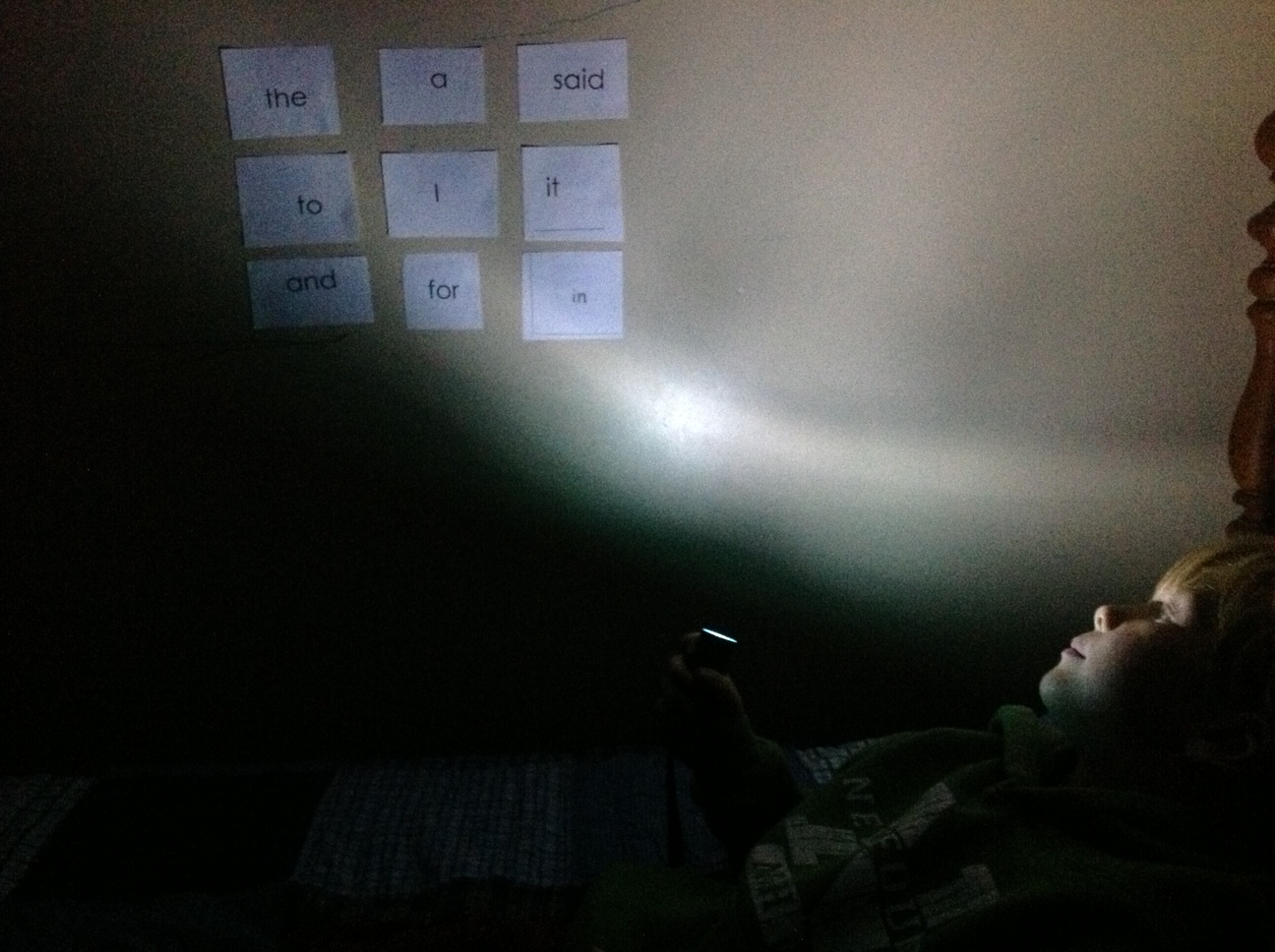
he knows now how to read.
he won’t pass through kindergarten again.
he won’t bring home another packet of sight words,
tape them to the wall
over his largely-unmade bed,
lie in the darkness,
read them by flashlight.
that moment,
that emerging,
that world,
that lifetime,
that he-and-I
is gone —
and I want it back.
—
Buddhism might one day free me from suffering, but not from being human. If anything, I feel my joy, my sadness, anguish, loneliness and contentment more acutely. Buddhism promises the possibility of welcoming each one. It has taught me, even, to welcome my attachments, to not run away from even my clinging.
My relief from suffering, when it arises, comes not from stoicism. Instead, it arrives when I allow the joy and dukkha that are the essence of fatherhood to be together. It comes when I turn and face them both and say, Yes, all of this. This is now. This is fatherhood. The wanting and the letting go. This is love. This is it. All of this. This is it.
 bussokuseki