Tag Archives: death

Untitled

fading
somewhere past paper thin

wisps of mourning
unreclaimed images

Many of my poems recently have been starting our long; I let them sit and then find myself stripping away words and lines that seem to clutter the feelings that first prompted me to write. Some moments I think I could write more without disturbing the essence if I were a better poet. Other moments, it seems just right.

No Need to Pretend

A co-worker and I stood in the office kitchen this morning as she searched for a spoon. We joked about how she might eat her cereal with a fork, how it might be easier if it were cereal and yogurt. My voice was clear and my laughter sounded easy. But my heart was somewhere else.

What is the toll, I wonder, from laughing, from pretending and projecting that all is well, when the reality is something different?

My wife and kids have been away for a few days, visiting family now that the school year has ended. I stayed home, with a few meetings this week that I could not miss. Last night I returned home close to midnight after one of those meetings and went out to close up the barn. Five of our six chickens were perched up on their roosts, with the sixth lying very still and awkwardly on the floor. I propped her up on some fresh hay for the night, but this morning she was less responsive and clearly dying. By now, she’s certainly passed.

My son was devestated this past fall when we lost our cat, a dear member of the family who the kids had grown up with. I was so deeply moved by his reaction as we buried her that a story poured out of me that night; that story became the inspiration for this blog.

The chickens were a present for him for his eighth birthday in April. He said it was the best birthday present ever.

I grew up raising chickens, along with sheep and rabbits. I remember the first spring flock that I was responsible for, and my dismay when we lost most of them to an intruder in the coop, likely a fox. I like to tell people that growing up around animals was a good experience, that I learned at an early age about caring for others, about life and death. My original Tibetan Buddhist practice, too, spoke of the value of coming to understand death as a part of our lives.

I’m not so sure this morning about either of those stories.

My son will come home today and learn about this new death. I’ll want to make everything all right for him, knowing at the same time that is not possible. I could look at this experience as a gift. But it’s hard. And what will I do when the death in our lives is closer?

I can’t share any of this with the people around me. I move around the office pretending that this is just another day. I pass by co-workers and talk jovially about this and that.

A little while ago I closed the office door to call my wife and let her know about the chicken, what is awaiting her at home. In the course of that conversation, I learned that the emails I have been sending to her over the last few days, reaching out to make a connection, have gone to an account she can’t access away from home. I hung up the phone feeling more isolated, then went to sit in a meeting and discuss the ramifications of the end of the fiscal year.

I didn’t realize it when I began, but my spiritual practice has taken shape as an effort to drop pretense, to live my life as it presents itself. In some respects, I have begun to realize this through Zen. At the Temple I can sit wth the complexity of fatherhood, marriage, love, joy and sadness, or share with a friend in the sangha after the evening practice has ended. I’ve been striving to do this at home too, with my wife and children, and it has allowed me to experience both joy and sadness more fully, more intimately.

At the same time, I am more accutely aware now of the places and times that I cannot. I worry about the cost.

When I get home this afternoon, I’ll hold my son and tell him it is okay to wonder why this has happened again to an animal he loved. I will tell him it is all right to be sad, to cry, to deeply feel whatever arises. I’ll tell him there’s no need to pretend.
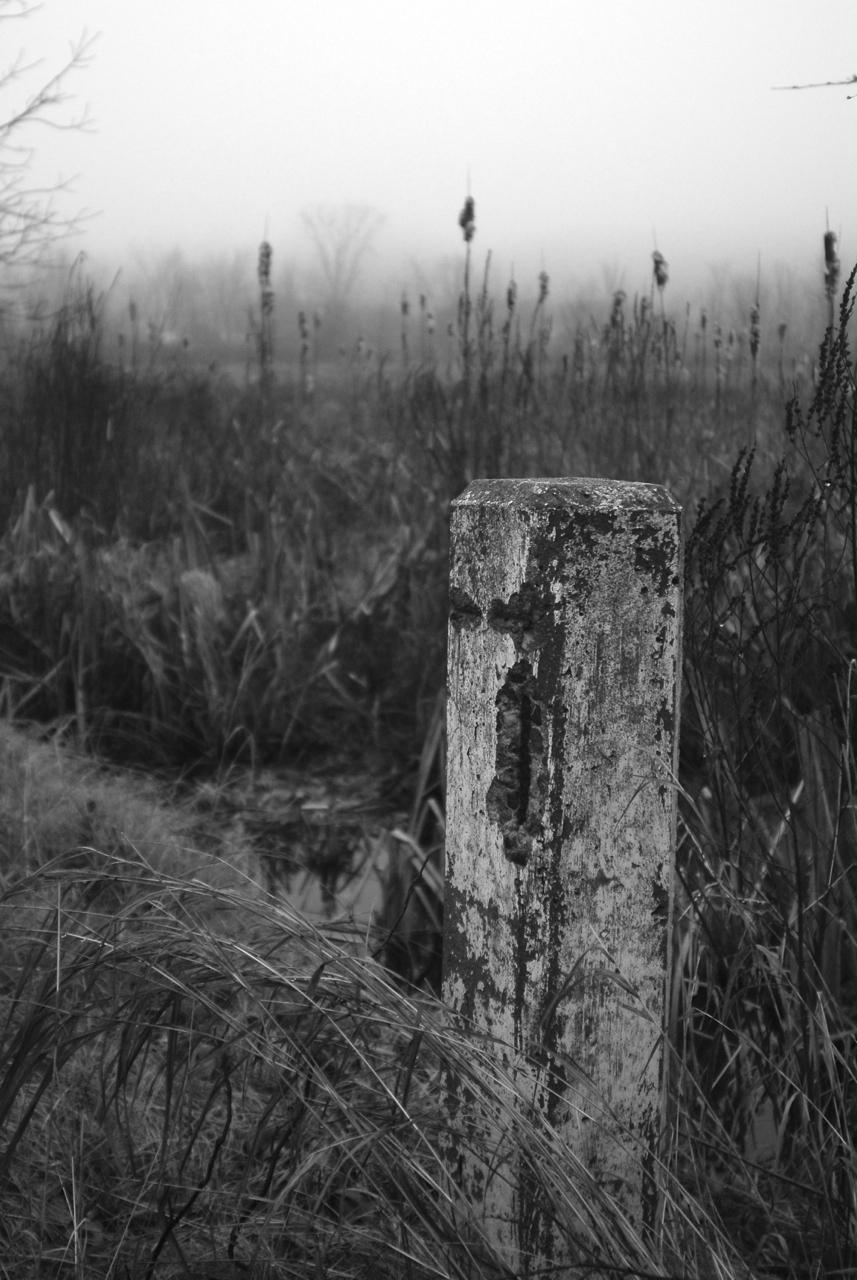
Winter Haiku #2

breathless light struggles —
long shadows arrive early
in the day’s passing

I feel like I’ve been writing around the edges recently. Circling around words that need to be expressed but aren’t ready to be committed. My notebook is littered with opening lines and untitled strings of paragraphs that don’t quite go together. This haiku managed to emerge complete, perhaps a part of circling inward. It is, in any event, one step next to another step, and what this moment holds.

Exhalation

I have been holding my breath again,
not leaving you much choice
but to wait.

This has always been my first response
when frightened —
but you learned this years ago.

I feel
your yearning
to speak
after the children have been tucked in
(we wouldn’t be interrupted)
and as the tea kettle births
steam onto the darkened window;

your abiding
in the deep quiet
(so ripe)
that hours later
envelopes us in our bed.

But exhalation
gives life to fear —
merely scratching out a poem,
lightly and in pencil,
would risk too much.

So you bear the silence for us,
even as our skin touches,
the cold back of your thigh
reminding me
you are there,
giving me everything
just by lying still,
waiting for me to breathe.

Shiny Rocks

I’ve gained nothing
from the practice,
instead losing some
of what I used to have.

What I looked for isn’t here.

Still fearful,
bitter at separation —

but, too,
softened against the day
and quicker to tears.

My daughter’s pockets
are filled with shiny rocks,
just like mine.
 

Antique Doors

I salvaged a set of antique doors
that were piled in a yard
close by the ocean
with other detritus
from a torn-down house.

Hoping the owner would let me take them,
I talked with him
and listened to his stories
about who had passed through them,
what rooms they had separated.

It isn’t easy to find ones just so,
with the hardware still intact.

Perhaps if I hold on to them,
I thought,
and shape them here or there,
they’ll fill up gaps —
shut out the draft from the
old ice-box pantry,
dampen the kitchen noise that drifts
so easily up the stairs
when our children are sleeping.

But I wonder
if I will have time to use them,
or if someday
someone will come
and collect them from me.
 
DSC_0012

Fatherhood and the Five Remembrances

As a part of our sutra service at the temple, we regularly chant the Five Remembrances. Intended by the Buddha to ward off an impression of permanence in our current existence, these ancient words remind us that we are of the nature to die, and that we cannot escape separation from those who are dear to us.

It is stark reality – but it isn’t while chanting at the temple that I feel the weight of this realization.

Last night, in the brief interim between the frenzy of the day and the full silence of night, my wife and I were talking about our children. I commented about the way in which our youngest son had greeted me when I arrived home from work. He ran to me with a stack of coupons he had cut out of a junk mail flyer from the local warehouse store. We stood in the middle of the kitchen, the table being set, the oven opening and closing, his brother and sister whirling around us. He wanted to sit right there, right then, and show me. Later on, I wondered aloud to my wife about what had held him there. Was it the coupons themselves that he was so eager to share? Was it his pride in the careful cutting? Or was it just the chance be together, no matter what was at the center of it or what was going on around us?

My son is always reaching into my back pocket, looking for my phone to take pictures. He takes snapshots of crayon boxes, books on the floor, our feet together on a stool, cookies cooling on the counter, and toy dragons on windowsills. Pictures of each room, doorway, lamp, and family member. Hundreds of them at a time. It clogs the memory on my phone, and we try not to have our kids spend too much time with electronics. But I always give in when he asks. Each time I hear the shutter click, I feel his joy and his presence in that moment.

So when he was perusing and clipping these junk mail coupons earlier in the afternoon, my wife remembered, he had paused when he came across a camera. Could I get a camera, he asked her. She replied that maybe he should put it on his Christmas list. She showed me how his eyes brightened as he offered, Or maybe I should get a phone.

I could see his face in my mind as my wife finished this story and as I walked toward the kitchen to make the next day’s coffee. I could imagine his deep pleasure at the idea of having his own phone with which to take endless pictures. I reveled, as I reached into the cupboard, in how much I adore him.

Then, in the time it took to pull down the box of coffee filters from the second shelf, the warmth of that adoration was swiftly swallowed whole by the remembrance of change. My change, his change. The remembrance that I am of the nature to die, of the nature to be separated from him. From everyone. From everything. The feeling sank deep into my gut, an impossibly heavy mixture of sadness, anger, and confusion.

Some say the words of the Five Remembrances help them to live in the present moment. I didn’t have the sutra in mind then, but I did make an effort to stand in the kitchen and accept all that was being offered, that koan pulling deep inside me. Mostly, it was a moment filled with wanting desperately to go and wake up my son, to watch him walk about taking pictures, then sit closely and talk about the ones we liked best. Would it matter how tightly I held him?

The Five Remembrances

I am of the nature to grow old.
  There is no way to escape growing old.
I am of the nature to have ill health.
  there is no way to escape having ill health.
I am of the nature to die.
  There is no way to escape death.
All that is dear to me, and everyone I love, are of the nature of change.
  There is no way to escape being separated from them.
My deeds are my closest companions.
  I am the beneficiary of my deeds.
  My deeds are the ground on which I stand.

Copper Pots

For a few years in my early twenties, my father gave me a piece of copper cookware every once in a while. Cooking was one of the ways we managed to connect, and the pieces were beautiful. And they were substantial. Weighty. As long as I took good care of them, they would last forever. I imagined I was building a permanent collection. I was building my life.

Over time, copper develops spots, and if you scrub it with regular soap and a sponge, it scratches quite easily. Instead, you have to use special cleaners and stay diligent about keeping up with them. My wife and I have occasionally fallen behind in this task, especially when we run out of the cleaner, which never rises quickly back to the top of the shopping list. After only a use or two, the pots begin to turn a mottled, and then even dingy, brown and stop reflecting the light of the room.

Eventually, though, some space opens in the time we have after a meal, and we get back on the bandwagon and clean the pots. But lately I’ve begun to wonder why we do it. Yes, they’re beautiful. And they might just last forever, or least for hundreds of years. But I’m not going to.

I do keep washing. There is something quite pleasing about the task itself, in the possibility of absorption in the water, the shine of the metal, the repetitive circular motion. Each time, though, what I hold in my hands feels a bit more like just a pot.